Youth Football Catching Drills for Beginners
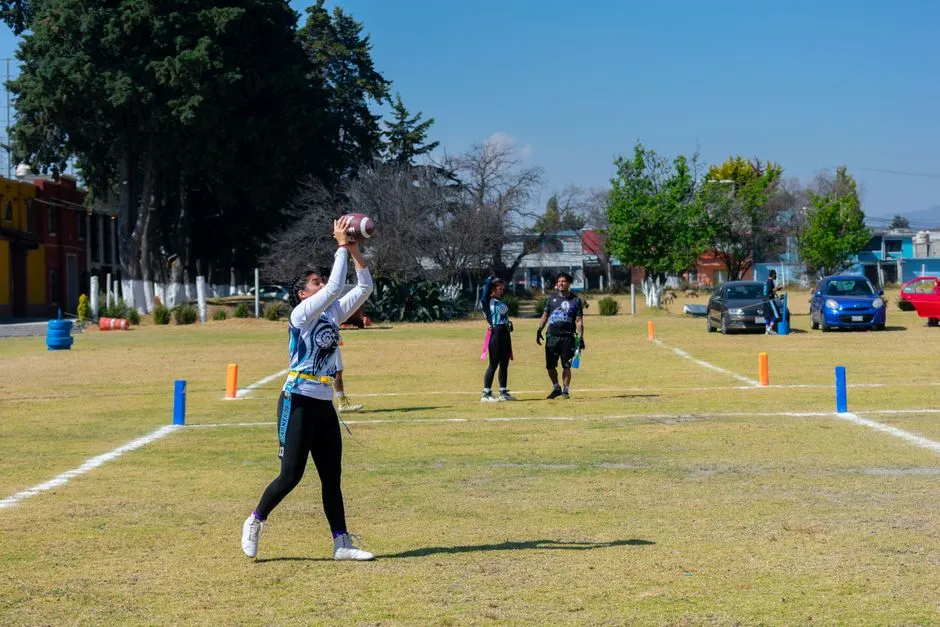
- Teach the catch from close, calm throws
- Use three cues, then let them try
- Drill 1: perfect-pass pairs
- Drill 2: color call after the catch
- Drill 3: move, settle, catch
- Drill 4: window catch with a passive defender
- Drill 5: low-middle-high catch ladder
- Give feedback that creates the next rep
- Stop for safety concerns
- Sources
Teach the catch from close, calm throws
Begin youth football catching drills with partners 5 to 7 yards apart, or closer when needed. Use accurate, gentle throws; teach the receiver to get balanced, show a comfortable hand target, watch the ball into the hands, secure it against the body, and stop under control. Add movement only after stationary catches become repeatable.
These are non-contact flag-football activities for a qualified, supervised practice. Use Coach Board for session planning. Follow league rules for ball size, equipment, space, and age group. Players with pain, injury restrictions, or possible concussion symptoms should not be pushed through a drill.
Use three cues, then let them try
Demonstrate once from the front and side, then use three short cues:
- Find it: face the passer and track the ball.
- Meet it: move the hands toward the ball rather than waiting rigidly.
- Keep it: secure the catch before turning upfield.
Hand position changes with the ball's path and the player's body. Avoid demanding one exact hand shape for every throw. Keep elbows soft and fingers ready; do not teach players to trap routine passes against a stiff chest as the only method. For a low ball, bend at the knees and reach safely rather than diving in a beginner line.
NFL FLAG's current football drill library also emphasizes body alignment, hand position, and securing the ball, and offers additional coach-designed flag activities.
Drill 1: perfect-pass pairs
Place pairs at a distance where they can complete most throws. One player makes five chest-area throws; the other catches, secures, and returns the ball. Then switch. Keep the queue short with enough footballs.
Count quality attempts, not consecutive perfection. After a drop, ask: Was the throw catchable? Did the receiver see it? Did the hands meet it? Fix one variable and try again. Running for drops makes mistakes delay learning.
Progress by adding a half-step of distance or varying the throw slightly left and right. Regress by moving closer, using an appropriate smaller ball allowed by the program, or letting a coach deliver consistent underhand tosses.
Drill 2: color call after the catch
Set one colored cone on each side of the receiver. Deliver a short pass. As the ball arrives—not before—call a color. The player catches, secures, turns toward that cone, takes two controlled steps, and stops.
This separates catching from running before possession is secure and adds a decision without a defender. Keep players well separated and make the return path outside the throwing lane.
The 60-minute flag practice places this drill within warm-up, stations, and small-sided play.
Drill 3: move, settle, catch
Create a short lane with two cones. The receiver jogs to the second cone, turns under control, gets balanced, and presents a target. The passer waits for the target, then throws. Rotate after three attempts.
Once timing is consistent, change the route: a short out, slant, or curl permitted by the team's playbook. Coach the receiver to look where they run, create safe spacing, and turn before the ball arrives. Do not use blind collisions, forced diving, or throws into crowded traffic. Those conditions add avoidable contact risk rather than useful beginner practice.
Drill 4: window catch with a passive defender
Mark a small safe area. A defender stands in a designated zone with hands down or holds a foam noodle only if the organization permits it and a trained coach can manage it safely. The receiver moves to open space, shows a target, and catches an uncontested pass. The defender does not swat, grab, collide, or play the receiver's body.
Progress to an active flag defender only under league rules and qualified supervision. The goal is for the receiver to find space and protect possession after a legal catch. Do not add contact to create pressure.
Drill 5: low-middle-high catch ladder
At the same successful distance, throw three middle, three low, and three reachable high passes without a jump. The receiver adapts to each path, catches first, and secures the ball.
NFL FLAG's lesson plans progress low, medium, and high catches before added distance or direction. Vary slightly left or right after control. Add an over-the-shoulder catch only in a clear lane without a defender; regress to short front-facing throws if tracking or balance breaks down.
Skill Stations has more gradual progressions.
Give feedback that creates the next rep
Describe one observable action: “You tracked it; now meet the ball sooner.” Avoid labels such as “bad hands.” Praise the thrower for catchable placement and the receiver for adjustment, communication, or recovery after a miss.
Use success ranges, not public rankings. If a player completes nearly every attempt, add one manageable challenge. If catches are rare, reduce distance or movement. Give every athlete repetitions at passer and receiver where the practice plan allows; early specialization can turn one confident arm into a team and everyone else into scenery.
Stop for safety concerns
Inspect the field, space groups, provide water, and follow current heat and weather procedures. USA Football's current practice guidelines call for eliminating drills that create unnecessary collisions without improving skill development.
If a player has possible concussion signs or symptoms after a bump, blow, or jolt to the head or a hit to the body, remove them immediately. The CDC's HEADS UP guidance says to check for danger signs, send an athlete with danger signs to an emergency department immediately, and keep the player out that day and until a healthcare provider clears return. Coaches should not judge severity themselves.
When possible, end with an easy catch, then ask the player to repeat the useful cue. Confidence should come from a skill becoming clearer—not from pretending every ball was perfect or every child learns it on the same schedule.
Sources
- NFL FLAG: football drill library — catching technique.
- NFL FLAG: Flag Football Lesson Plans — low, medium, high, and over-the-shoulder catches.
- USA Football: Youth Football Practice Guidelines — high-risk drill and collision guidance.
- CDC HEADS UP: Responding to a Sports-related Concussion — concussion response and return clearance.